
Wait. Is JCM Berne endorsing toxic masculinity? He’s great at dad jokes, he must be joking, right?

I know what you’re thinking. Let me explain it to you (or should I say . . . mansplain it to you?)
You’re thinking, “Joe,” (Joe is my actual name, or rather the nickname I go by in real life, even though I write as JCM), “surely you have made a critical error when titling this post. Surely, you do not dare to expound on the beauty of toxic masculinity, when by its very name it is a bad thing. Toxic, even. Surely you should reconsider before releasing this!”
To which I say, first, don’t call me Shirley (if it helps, read that out loud. It might not help; it’s a terrible joke).
Secondly, I suggest you untangle your knickers and listen to what I’m saying. I’m fully aware that toxic masculinity refers to a set of traits, associated with traditional manly expectations, that harm both society and the men who embody them. I get it, I really do. You’re completely focused on the harm done by misogyny, homophobia, refusing to acknowledge emotions, casual bullying, violent confrontations to assert status, and all the other traits that society has taught us make REAL MEN, as if our pronoun choices aren’t doing the trick perfectly well.
But, and this is the critical but, (yes, I said “but” twice in one sentence, stop giggling, Beavis), you’re not thinking about things the way a writer thinks. You’re focused on actual harm done to actual people in the actual world.
Writers, however, are under no such constraint! Writers are free, no encouraged, to ignore the real world and the real people who live in it and think only (or perhaps mostly) about how facets of the world impact storytelling.
And let me tell you, toxic masculinity is AMAZING for storytelling. I don’t know what I’d do without it. Thank you, patriarchal setting that has raised me!
“To tell a good story, one must begin with a flawed character.”
I know what you’re thinking now! (You’re very transparent. You should work on that.) “Joe, how is toxic masculinity good for storytelling? Whatever do you mean? Please educate me, for I do not understand and seek your wisdom and guidance!” (I might have overdone that bit, but my ego needs a bit of stroking today. If you want to sound less sycophanty, write your own essay. Is sycophanty even a word? Sycophant-like?)
I’m glad you asked. The thing is, to tell a good story, one must begin with a flawed character.
No exceptions.
Flawless characters are boring. We can’t relate to them. They come across as an author’s wish fulfillment, the Gary Stu problem; as if the writer is placing themselves in the story, and in their story they. Are. Perfect. And that’s annoying, because we know writers, and none of them are perfect. Well, perhaps one or two exceptions <cough, cough>.
Stories need tension like fish need water or writers need booze, and if a character is perfect it’s dreadfully difficult to give their internal plotlines any kind of tension. Booooring. So what do we do? We give our characters flaws. Yay! Problem solved.
“What flaws are easier to forgive than the ones we’ve spent a lifetime learning to overlook?”
But which flaws? We need believable flaws—the kind that we can find in real people that really exist. Flaws that bother us but that seem possible to overcome. Flaws we can forgive—and what flaws are easier to forgive than the ones we already find in our loved ones, that we’ve spent a lifetime learning to overlook?
I’m betting you’re getting a pretty good idea where I’m going with this by now. See, I told you, you’re transparent. But in case you’re a bit behind, let me elaborate: We can pick the flaws for our characters out of the wonderfully varied box of chocolates that is toxic masculinity!
Now, to use toxic masculinity this way one must be judicious. It’s tempting, I know, to saddle our male characters with all the toxic traits. After all, so many men in real life display them! But restrain yourself!
The most toxic attributes have to be carefully applied, lest our character become simply too unlikeable. Misogyny? Homophobia? You can add a dash or a dribble at most. Have your male character uncomfortable around a conversation about menstruation? We can accept that. If he thinks women shouldn’t work outside the home? That’s pushing your luck. Unless you’re writing a villain, then go to town. Can your man avert his eyes when seeing two men kissing? That’s probably okay, but don’t let him use an offensive word to refer to them afterward.
You’re free to play in that sandbox, but you’ll soon find that the real beauty in toxic masculinity lies below that nasty surface. Skip right past the overtly terrible and sink into the uncomfortable middle.
What do I mean? I’m glad you asked.
“Nothing progresses a plot faster than some clueless dude stumbling around, ‘fixing’ things he shouldn’t be going near.”
Look to find those toxic traits that aren’t too toxic. How about a character who has a hard time expressing their emotions? That’s a wonderful flaw. They can seem cold and heartless until the final scene, where they break down and cry (probably while drunk, that adds credibility) and tell their trusty sidekick/teammate/enemy/boss/ animal companion how they really feel. It’s love, they feel love.
Make it really hard for your character to apologize when they’re wrong! But not to the point where they don’t realize they’re wrong. Just have them incapable of verbalizing it, and instead do acts of contrition. Like building things out of wood for the people they’ve wronged. Chairs are good. Everybody needs chairs.
Nothing beats a character who takes charge and tries to fix all the problems! Especially when they don’t really have the tools to do that. Double-especially when they didn’t really listen to the problems to begin with, so they don’t fully understand what’s wrong. Sound like someone you know? I’m sure it does. And nothing progresses a plot faster than some clueless dude stumbling around, ‘fixing’ things he shouldn’t be going near.
You need more?
How about a guy who refuses to admit when he’s in over his head? Standing tall, facing down the enemy, refusing to give in, even when a strategic retreat would be, in the long term, a far better choice for everyone involved.
Or the old standby of a man so self-reliant he refuses to ask for help, even when he obviously needs it. Sound familiar? No? Turn off your GPS and see how long it takes any man in your life to stop and ask for directions.
In case you’re wondering whether I use these in my own writing, the answer, as always, is, “buy my books and read them yourself!” But seriously, of course I do. Every book with a male lead character is about that character overcoming one or more of these traits.
You don’t have to be grateful for the plethora of flaws that come packaged into our stereotypes of masculinity, but you should be. They can provide you with an abundance of fodder for your stories that will resonate with your audience, and they’re absolutely free! Except for the astronomical price society pays for their presence. But that’s already happening.
Is this enough to prove that toxic masculinity is beautiful? Or just that it’s useful? I’ll let you decide for yourself (magnanimous of me, yes?), but I’ll say one thing: if so many beautiful stories can come out of an idea, surely that idea is itself beautiful?
Or not, I don’t know.
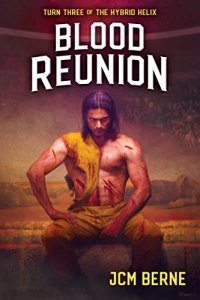
Check JCM Berne’s ongoing series The Hybrid Helix, where a man named Rohan leaves his peaceful retirement to do some spaceship-punching and meet talking space bears.


About JCM Berne
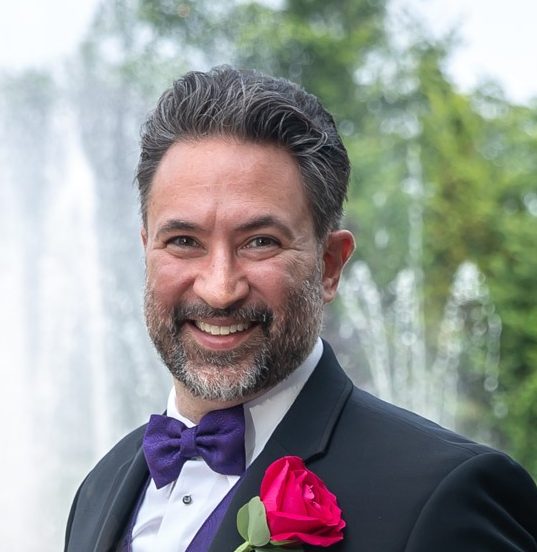
JCM Berne codes by day. By night he retreats to his secret lair and fights the deconstruction of the superhero genre by writing stories where the heroes are trying to do the right thing and, for the most part, succeed. He spends far too much time on twitter, discord, and instagram, whispering to himself that scrolling through one more set of pictures of expensive watches will somehow further his writing career.
 Tiny Elf Arcanist
Leave a comment